The Malaysian curriculum is designed to promote national unity, social cohesion, and academic excellence. The national curriculum, known as the Kurikulum Standard Sekolah Kebangsaan (KSSK), is implemented in all national schools and emphasizes the development of critical thinking, creativity, and problem-solving skills.

The Malaysian education system has its roots in the colonial era, when the British established a system of schools that catered primarily to the needs of the expatriate community. After independence in 1957, the government made significant efforts to expand access to education, with a focus on promoting national unity and social mobility. Today, education is highly valued in Malaysian society, with a strong emphasis on academic achievement and personal development.

Malaysia, a multicultural and multilingual country in Southeast Asia, boasts a diverse and vibrant education system. The country's education sector has undergone significant transformations over the years, with a focus on producing well-rounded individuals who are equipped to compete in an increasingly globalized world. In this article, we will delve into the Malaysian education system, exploring its structure, curriculum, and school life, as well as the challenges and opportunities that lie ahead.

Malaysian education and school life offer a unique blend of academic rigor, cultural diversity, and personal growth. While the education system faces several challenges, the government has introduced reforms and initiatives aimed at improving quality, equity, and access. As Malaysia continues to navigate the complexities of the 21st century, its education system will play a critical role in shaping the country's future, producing well-rounded individuals who are equipped to succeed in an increasingly globalized world.

Assessment in Malaysian schools is largely examination-based, with a strong emphasis on standardized testing. Students are evaluated on their performance in various subjects, with the SPM examination serving as a major milestone in their academic journey.
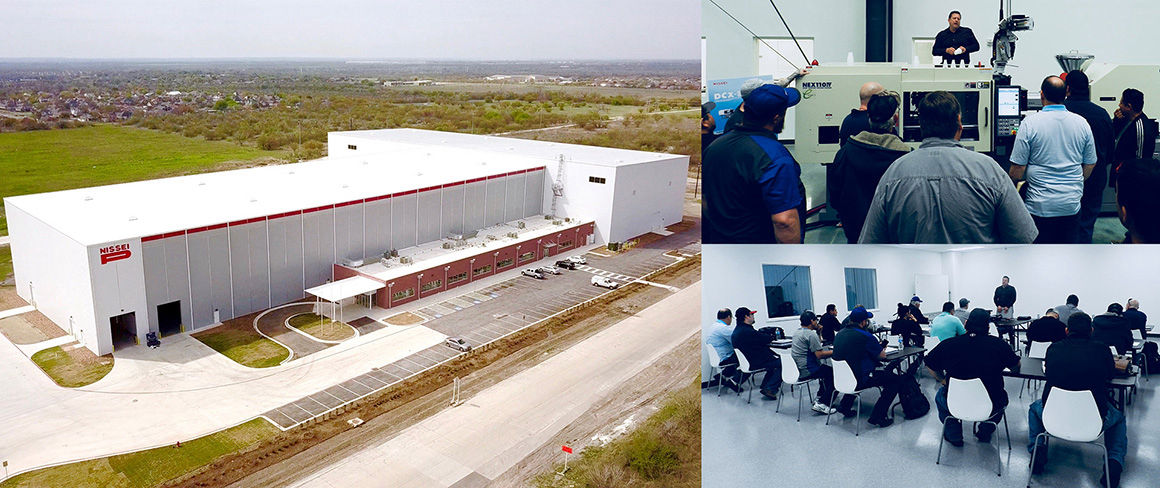

COURSE DESCRIPTIONS

  • First Day's Agenda
    - Nissei company profile
    - The molding machine: general descriptions
    - Exploring the actual machine
    - Manual operation procedures, including mold setup
    - Procedure for automatic operation
  • Second Day's Agenda
    - Details of the electronic controller
    - Optimizing the molding conditions
    - Controlling the injection process
    - Statistical quality control
    - Starting the machine and molding operation
  • Third Day's Agenda
    - Hydraulic components and circuits
    - Electrical diagrams
    - Diagnostic functions and troubleshooting
    - Maintenance and inspection
    - Presentation of Completion Certificates
NISSEI School USA

Nissei America Headquarters and Nissei Texas Technical Center

HOURS

9:00am to 4:30pm
*Lunch 12 noon to 1PM


FEES

$399.00 per person
*including textbooks and lunch


REGISTRATION FORM DOWNLOAD

After confirming the availability (please call or email the location of your choice), please fill out and send us the registration form.

LOCATIONS

NISSEI LA

Los Angeles Tech Center

623 S State College Blvd. #10A
Fullerton, CA 92831
Phone: 714-693-3000
Size: 12 ppl/course
NISSEI Chicago

Chicago Tech Center

721 Landmeier Road
Elk Grove Village, IL 60007
Phone: 847-228-5000
Size: 11 ppl/course
NISSEI New Jersey

New Jersey Tech Center

1085 Cranbury South River Road Suite 7
Jamesburg, NJ 08831
Phone: 732-271-4885
Size: 12 ppl/course
NISSEI Texas

Texas Tech Center

3730 Global Way
(formerly Lyster Rd)
San Antonio, TX 78235
Phone: 732-271-4885
*Minimum of 10 ppl/course

Free Download Video Lucah Budak Sekolah Melayu Exclusive | Free ★ |

The Malaysian curriculum is designed to promote national unity, social cohesion, and academic excellence. The national curriculum, known as the Kurikulum Standard Sekolah Kebangsaan (KSSK), is implemented in all national schools and emphasizes the development of critical thinking, creativity, and problem-solving skills.

The Malaysian education system has its roots in the colonial era, when the British established a system of schools that catered primarily to the needs of the expatriate community. After independence in 1957, the government made significant efforts to expand access to education, with a focus on promoting national unity and social mobility. Today, education is highly valued in Malaysian society, with a strong emphasis on academic achievement and personal development. free download video lucah budak sekolah melayu exclusive

Malaysia, a multicultural and multilingual country in Southeast Asia, boasts a diverse and vibrant education system. The country's education sector has undergone significant transformations over the years, with a focus on producing well-rounded individuals who are equipped to compete in an increasingly globalized world. In this article, we will delve into the Malaysian education system, exploring its structure, curriculum, and school life, as well as the challenges and opportunities that lie ahead. The Malaysian curriculum is designed to promote national

Malaysian education and school life offer a unique blend of academic rigor, cultural diversity, and personal growth. While the education system faces several challenges, the government has introduced reforms and initiatives aimed at improving quality, equity, and access. As Malaysia continues to navigate the complexities of the 21st century, its education system will play a critical role in shaping the country's future, producing well-rounded individuals who are equipped to succeed in an increasingly globalized world. After independence in 1957, the government made significant

Assessment in Malaysian schools is largely examination-based, with a strong emphasis on standardized testing. Students are evaluated on their performance in various subjects, with the SPM examination serving as a major milestone in their academic journey.