
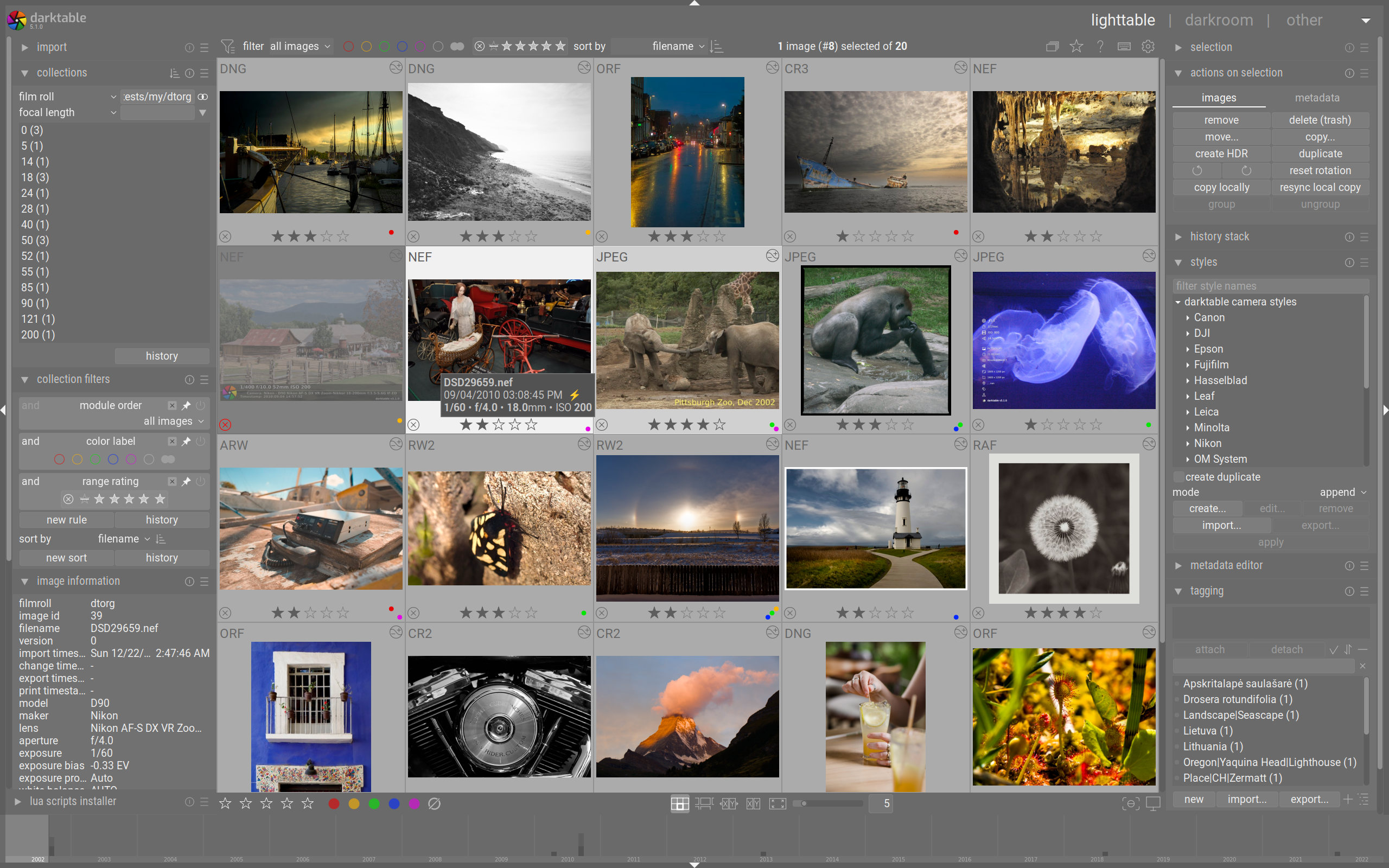
darktable is an open source photography workflow application and raw developer. A virtual lighttable and darkroom for photographers. It manages your digital negatives in a database, lets you view them through a zoomable lighttable and enables you to develop raw images and enhance them.
Have a look at our current features and how to install it on your system. And if you're new to darktable, the FAQ will answer many of your questions.
"The test bank contains the exact questions from my upcoming exam." Reality: Most professors heavily modify questions. Expect different numbers, different functional groups, or reversed reaction directions. Organic Chemistry Solomon 11th Edition Test Bank
"If I just memorize the test bank, I'll pass organic chemistry." Reality: Organic chemistry exams test problem-solving , not rote memorization. Memorizing answers without understanding mechanisms will lead to failure on synthesis and spectroscopy questions. Final Verdict: Should You Use the Solomon 11th Edition Test Bank? Yes—but with caveats. The Organic Chemistry Solomon 11th Edition Test Bank is arguably one of the most powerful study aids available for this challenging course. Its volume of questions, alignment with a leading textbook, and detailed answer keys make it superior to generic study guides.
Disclaimer: This article does not promote or distribute copyrighted material. Always respect your institution’s academic integrity policy and intellectual property laws. "The test bank contains the exact questions from
Take a random selection of 30-40 questions from the test bank. Set a timer (e.g., 1 minute per multiple-choice question, 5 minutes per synthesis). Do not peek at the answers.
Never open the test bank before reading the chapter and attempting the official end-of-chapter problems. The test bank is for reinforcement , not initial learning. The Organic Chemistry Solomon 11th Edition Test Bank
For decades, Organic Chemistry by T.W. Graham Solomons, Craig B. Fryhle, and Scott A. Snyder has been the gold-standard textbook for undergraduate organic chemistry courses. The 11th edition, in particular, represents a refined balance of conceptual learning and practical problem-solving. However, any student who has faced the daunting challenge of synthesis reactions, stereochemistry, and reaction mechanisms knows that reading the textbook is only half the battle. The other half is assessment.